Disclaimer: This content is for informational purposes only and is not a substitute for professional medical advice, diagnosis, or treatment. Always consult your physician if you have concerns about your blood oxygen levels.
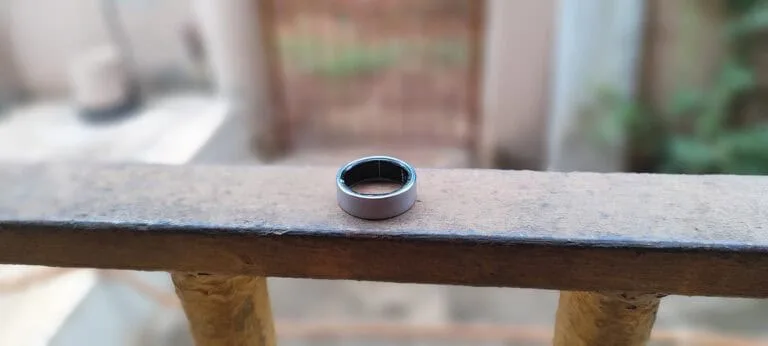
Yes, most modern smart rings can track blood oxygen (SpO2) levels. They use the same type of sensor — a pulse oximeter built into the ring — that shines red and infrared light through your finger to estimate how much oxygen your blood is carrying. My ring gives me a nightly SpO2 average and flags any significant dips during sleep.
But here’s the important context: a smart ring SpO2 reading is a wellness estimate, not a medical-grade measurement. Let me break down exactly how it works, how accurate it is, and when it actually matters.
How Does a Smart Ring Measure Blood Oxygen?
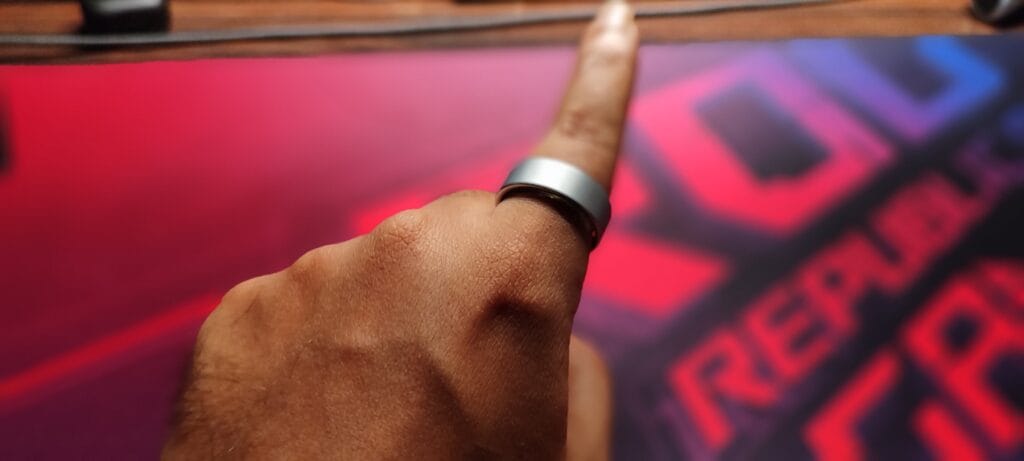
Smart rings use a small PPG (photoplethysmography) sensor on the inner surface of the band. This sensor shines light into your finger and measures how much light is absorbed by your blood.
Oxygenated blood absorbs light differently than deoxygenated blood. The sensor calculates the ratio and gives you a percentage — your SpO2 reading. A normal reading is typically between 95-100%.
Here’s what’s interesting about the finger as a measurement site: it’s actually one of the best places on your body for pulse oximetry. Medical-grade finger pulse oximeters have been the gold standard for decades. The arteries in your fingertip are closer to the surface and have stronger pulsatile blood flow than your wrist.
That’s one area where a smart ring has a genuine advantage over a smartwatch for SpO2 measurement.
How Accurate Is Smart Ring SpO2 Tracking?
In my experience, my smart ring’s SpO2 readings are consistently within 1-2% of a medical finger pulse oximeter. I tested this by wearing both at the same time on multiple occasions.
Here’s what I found:
| Device | SpO2 Reading | Conditions |
|---|---|---|
| Medical pulse oximeter | 97% | Resting, room temperature |
| Smart ring | 96% | Same conditions, same time |
| Medical pulse oximeter | 98% | After morning walk |
| Smart ring | 97% | Same conditions, same time |
The readings were close enough for wellness tracking. But there are important caveats:
- Cold fingers throw off the reading. If your hands are cold, blood flow to your fingertips drops, and SpO2 readings become unreliable. I’ve seen readings dip to 93% on cold mornings, then bounce back to 97% once my hands warmed up.
- Movement affects accuracy. Smart rings measure SpO2 most accurately when you’re still — that’s why most rings take readings during sleep.
- It’s not a medical device. No smart ring is FDA-cleared for SpO2 monitoring. If you have a respiratory condition like COPD or sleep apnea, use a medical-grade device prescribed by your doctor.
When Does Blood Oxygen Tracking Actually Matter?
Honestly, for most healthy people, SpO2 tracking isn’t something you’ll check daily. Your blood oxygen stays in a narrow, healthy range (95-100%) and rarely dips unless something specific is happening.
But there are three scenarios where I’ve found it genuinely useful:
1. Sleep quality insights
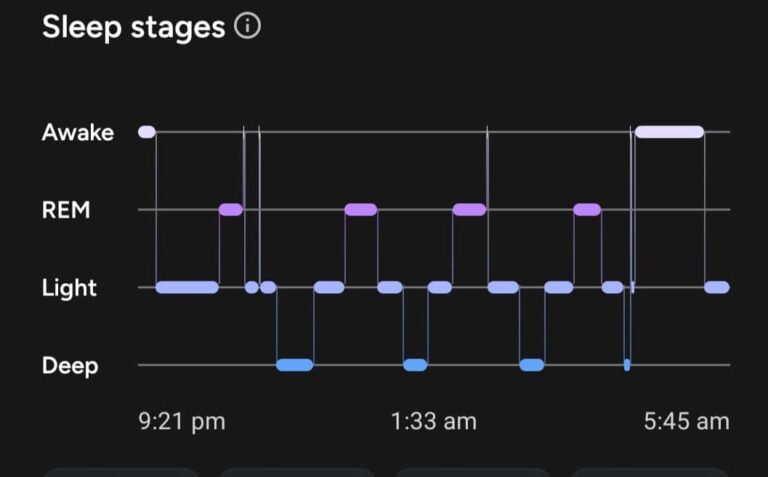
My ring tracks SpO2 throughout the night. Consistent dips below 90% during sleep could indicate sleep-disordered breathing or sleep apnea. I noticed my overnight SpO2 occasionally dropped to 92-93% on nights when I was congested from allergies. That data helped me realize how much nasal congestion was affecting my sleep quality — something I wouldn’t have known without the ring.
⚠️ Important: If your ring shows frequent overnight SpO2 drops below 90%, talk to your doctor. This is not something to self-diagnose — but the data can be a valuable starting point for a conversation with a medical professional.
2. Altitude and travel
When I traveled to a higher elevation last year, my ring showed my SpO2 dropping from my usual 96-97% to 92-93% for the first two days. It gradually climbed back as my body acclimatized. Without the ring, I wouldn’t have had any visibility into how my body was adjusting.
3. Illness detection
Just like skin temperature tracking on my smart ring flagged a cold before I felt symptoms, SpO2 dips can sometimes signal that your body is fighting something. I noticed a drop to 94% the day before I came down with a respiratory infection. It wasn’t diagnostic — but combined with elevated skin temperature and tanked HRV, the pattern was clear.
Smart Ring SpO2 vs. Smartwatch SpO2 — Which Is Better?
For SpO2 specifically, the smart ring has a slight edge:
| Factor | Smart Ring | Smartwatch |
|---|---|---|
| Sensor placement | Fingertip — gold standard location | Wrist — weaker blood flow |
| Measurement accuracy | Slightly better at rest | Good, but more prone to motion artifacts |
| Overnight tracking | Comfortable enough to wear all night | Many people take watches off to sleep |
| On-demand readings | Usually app-triggered | Can check from wrist anytime |
| Data consistency | 24/7 because you never take it off | Gaps when watch is charging or removed |
The bottom line: if overnight SpO2 data matters to you (and it should, especially for sleep quality monitoring), a smart ring captures it more reliably because you’ll actually wear it to bed.
If you want more details on the full range of health metrics a smart ring tracks beyond just SpO2, I wrote about my complete experience in my smart ring daily wear review.
Should You Rely on a Smart Ring for Blood Oxygen Monitoring?
For general wellness awareness — yes, absolutely. A smart ring gives you a useful baseline of your SpO2 patterns, especially during sleep, travel, and illness.
For medical monitoring — no. If you have a diagnosed respiratory condition, heart condition, or sleep apnea, use a medical-grade pulse oximeter and follow your doctor’s guidance.
Think of your smart ring’s SpO2 feature the way you’d think of a bathroom scale — it gives you a trend and flags when something might be off. It’s not a substitute for a clinical measurement, but it’s far better than having no data at all.
FAQ
Most smart rings are accurate within ±2-3% of medical pulse oximeters when measuring SpO2 at rest. The finger provides better blood perfusion than the wrist, which gives smart rings a physiological advantage over smartwatches. However, accuracy can be affected by factors like ring fit, cold hands, skin tone, and motion. Smart rings are designed for wellness trend tracking, not clinical diagnosis.
Smart rings cannot diagnose sleep apnea — that requires a formal sleep study (polysomnography). However, they can track overnight SpO2 patterns and flag repeated oxygen dips during sleep, which may indicate breathing irregularities worth discussing with your doctor. Think of it as a screening tool, not a diagnostic device.
“…Think of it as a screening tool, not a diagnostic device. If you’re wondering how these wearables handle general sleep, read more about how accurate smart rings are for tracking sleep.”
A normal SpO2 reading for a healthy person is between 95% and 100%. Readings between 90-94% are below normal and should prompt a medical consultation. Readings below 90% indicate hypoxemia and require immediate medical attention. Some individuals with chronic respiratory conditions may have lower baselines as confirmed by their doctor.
Yes, generally. The finger has a denser network of capillaries near the skin surface, providing stronger blood flow signals for PPG sensors. The finger also produces fewer motion artifacts compared to the wrist, which is a joint that constantly moves. This is why medical pulse oximeters have always used the fingertip, and why smart rings often outperform smartwatches for SpO2 accuracy.
About the Author: Akshay is a wellness enthusiast and the founder of Wellness Health Daily. After years of experimenting with wearable health technology, nutrition strategies, and evidence-based wellness routines, Akshay shares honest, experience-driven insights to help readers make informed health decisions.