Disclaimer: This content is for informational purposes only and is not a substitute for professional medical advice, diagnosis, or treatment. Always consult your physician before making changes to your health routine.
I wore a smartwatch for three years before I tried a smart ring. Within the first week, I realized I’d been tolerating discomfort I didn’t even notice anymore. My smart ring tracks everything my watch did — sleep cycles, heart rate, HRV, stress, VO2 max — but I genuinely forget it’s on my finger. That single difference changed how consistently I track my health.
This isn’t a spec sheet comparison. I want to walk you through what it’s actually like to live with a smart ring on your finger 24/7 — the comfort, the data, the motivation, and the honest limitations.
Why Did I Switch From a Smartwatch to a Smart Ring?
I didn’t hate my smartwatch. But I was tired of the constant buzzing, the nightly discomfort, and the “tech fatigue” of having a screen demanding my attention on my wrist all day.
The real turning point? Sleep tracking. I’d take my watch off at night because it was uncomfortable, which meant I had zero sleep data — the one metric I actually needed most. When I read that smart rings use the finger’s arteries (which are closer to the skin surface) for more accurate resting biometrics, I decided to give one a try.
Best decision I’ve made for my wellness routine.
Is a Smart Ring Comfortable to Wear All Day?
Yes — and this is the single biggest advantage over a smartwatch. My ring weighs about 4 grams. Most days, I completely forget I’m wearing it.
Here’s what surprised me about the comfort difference:
| Factor | Smart Ring | Smartwatch |
|---|---|---|
| Weight | ~4-6 grams | ~40-70 grams |
| Sleep comfort | Forget it’s there | Wakes me up when I roll over |
| Typing/working | No interference | Screen catches on desk edge |
| Showering | Waterproof, stays on | I always took mine off |
| Battery anxiety | Charge every 5-7 days | Charge every 1-2 days |
| Style | Looks like jewelry | Screams “tech bro” |
I work at a desk most of the day, cook, exercise, and sleep with my ring on. I’ve bumped it maybe twice in months. My smartwatch? I used to catch it on doorframes, jacket sleeves, and my laptop edge constantly.
The comfort factor isn’t just about convenience — it’s about data consistency. Because I never take my ring off, I have continuous 24/7 health data for the first time. And that’s where the real value kicks in.
How Does Smart Ring Sleep Tracking Actually Work?
“Smart rings track sleep using three sensors working together… I’ve written an in-depth breakdown on how accurate smart ring sleep tracking really is based on clinical validation studies.”
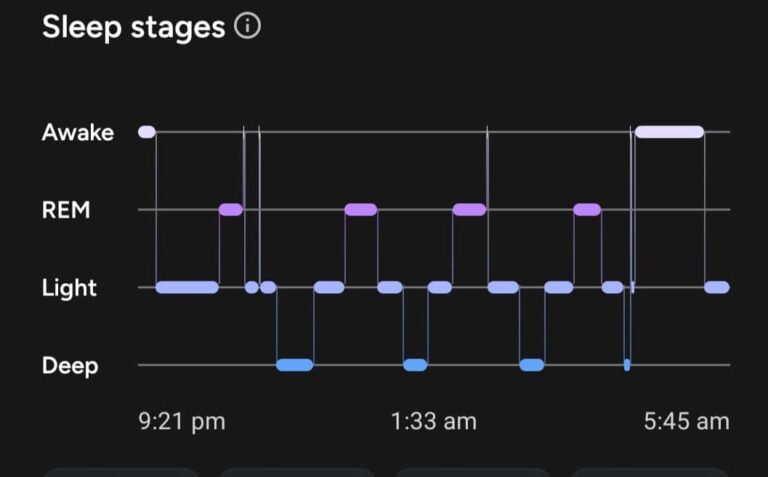
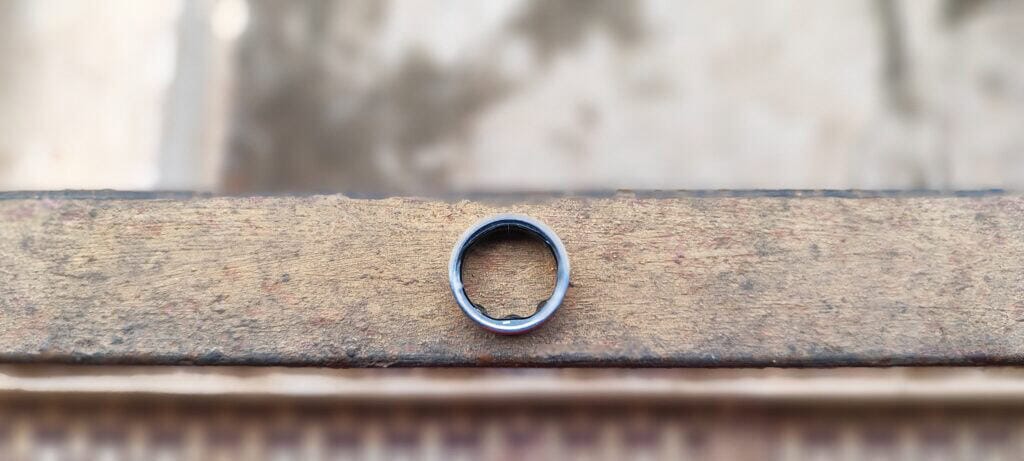
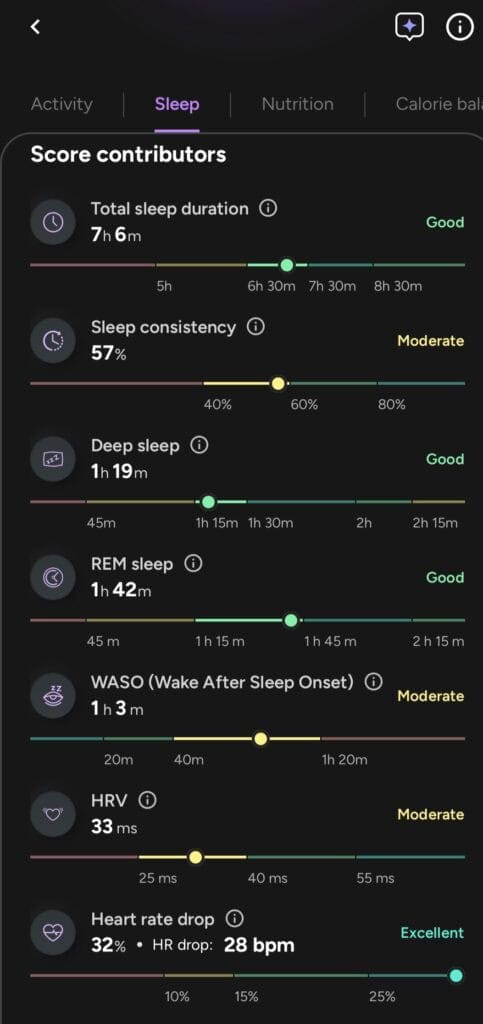
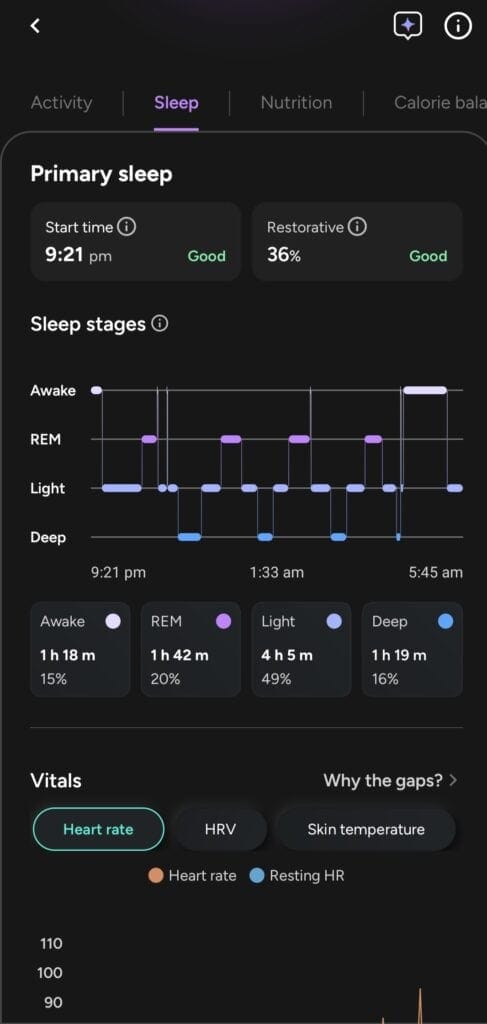
Smart rings track sleep using three sensors working together: a PPG (photoplethysmography) sensor that reads your heart rate through your finger’s blood vessels, an accelerometer that detects movement and sleep stages, and a skin temperature sensor that tracks your body’s circadian rhythm.
Here’s what my typical morning looks like now: I wake up, open the app, and see my full night broken down into light sleep, deep sleep, and REM cycles.
What actually surprised me was how actionable the data became. I noticed a clear pattern within the first month:
- Nights I ate late (after 9 PM): My deep sleep dropped by 30-40 minutes
- Nights I skipped screens before bed: My REM sleep increased noticeably
- After alcohol: My resting heart rate spiked 10-15 BPM and my HRV tanked
I never saw patterns this clearly with my smartwatch because I wasn’t wearing it consistently at night. The ring solved that problem simply by being comfortable enough to forget about.
What Is a Recovery Score and Why Does It Matter?
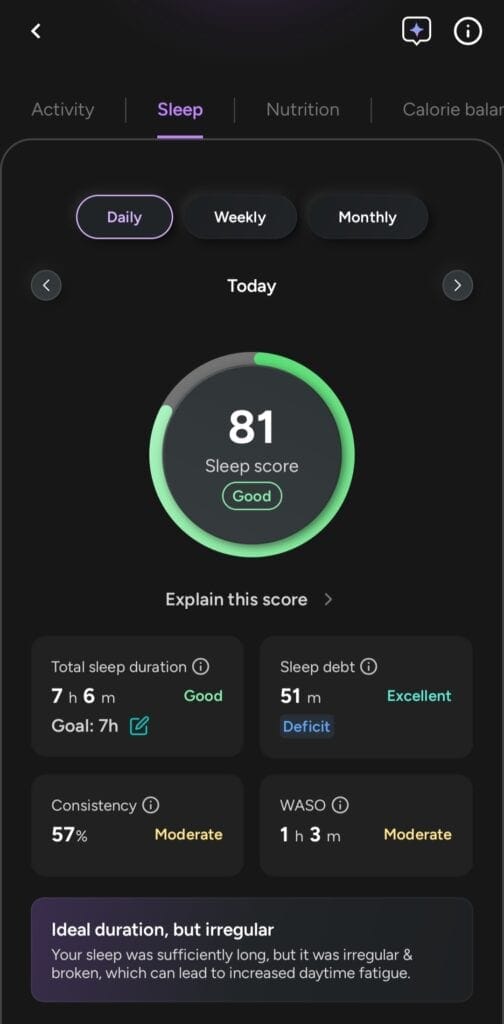
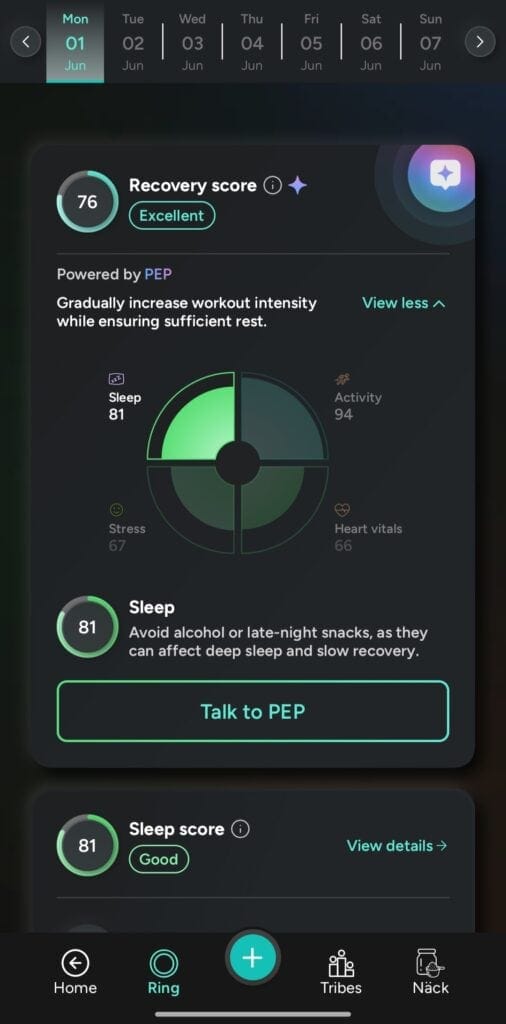
Your recovery score is a single number (usually 0-100) that tells you how ready your body is to perform today. It’s calculated from your sleep quality, HRV (heart rate variability), resting heart rate, and skin temperature trends overnight.
I’ll be honest — I was skeptical at first. A number telling me how I feel? But after two months of tracking, I noticed something: the days my recovery score was below 60, I genuinely felt sluggish. And the days it hit 85+, I crushed my workouts.
Now I check my recovery score before deciding how hard to push at the gym. Low recovery day? I’ll do yoga or a light walk instead of a HIIT session. It sounds simple, but this one habit has dramatically reduced how often I feel burned out by Friday.
The science behind it makes sense too. Research shows that HRV is a reliable indicator of autonomic nervous system recovery, and training based on HRV-guided decisions leads to better performance outcomes than fixed training schedules.
How Does the Active Score Keep Me Motivated?
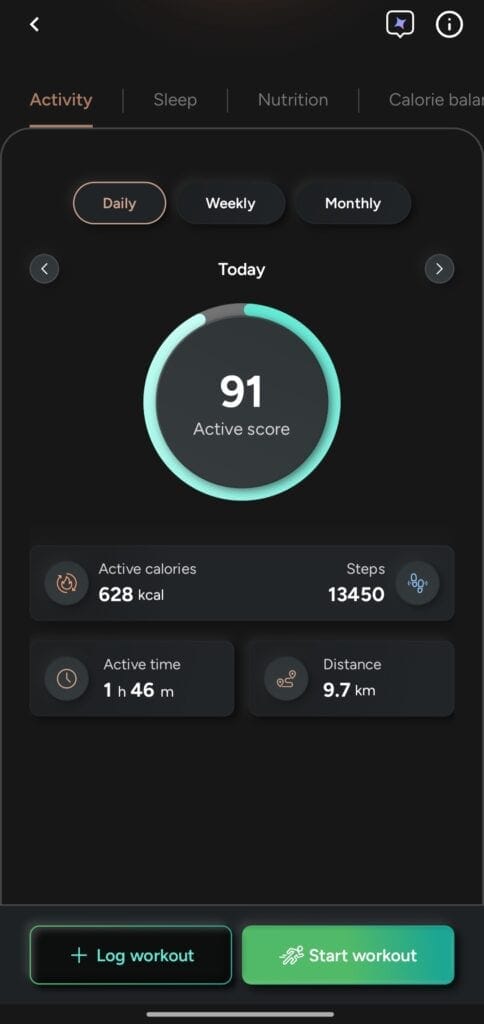
The active score is where I get my daily motivation. It combines four metrics into one dashboard:
- Active calories burned — calories from actual movement, not just existing
- Total steps — my daily step count
- Active time — minutes of moderate-to-vigorous activity
- Distance — how far I’ve actually moved
What I love about this is that it doesn’t guilt-trip me. It’s not a smartwatch buzzing at me to “stand up” every hour. Instead, I check my active score once or twice a day, and that’s enough to nudge me toward taking the stairs, walking after lunch, or adding a 10-minute evening walk.
My typical targets:
- Active calories: 400-500 kcal/day
- Steps: 8,000-10,000
- Active time: 45-60 minutes
- Distance: 5-7 km
The ring tracks these passively. No fiddling with workout modes. No tapping a screen to start tracking. It just… tracks. That passive approach actually made me more consistent than the smartwatch ever did, because there was zero friction.
Can a Smart Ring Actually Help Manage Stress?
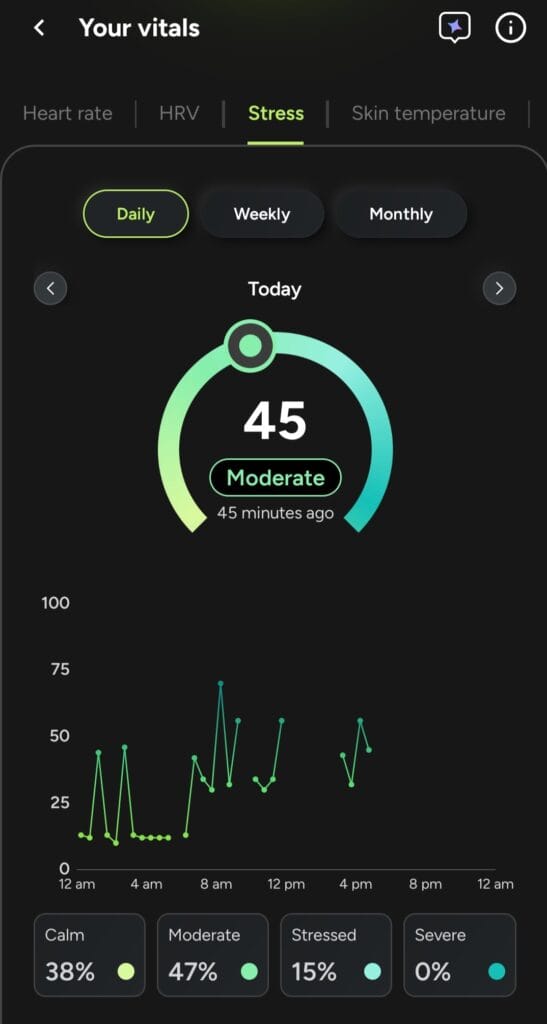
Yes, but not in the way most people expect. The ring doesn’t tap you on the finger and say “you’re stressed.” Instead, it monitors your physiological signals — heart rate variability, resting heart rate, and skin temperature — throughout the day, and flags patterns.
After a few weeks of wearing mine, I could see clear stress spikes in my data:
- Monday mornings at work: HRV dropped consistently
- After skipping my morning walk: stress scores were noticeably higher by afternoon
- Weekend mornings: my lowest stress readings of the week
Seeing this data in black and white motivated me to actually make changes. I started doing 5 minutes of deep breathing on Monday mornings. I stopped skipping my morning walks. Small changes, but the ring gave me the data to see they were working.
It’s not a replacement for professional mental health support — but as a self-awareness tool, it’s been genuinely useful.
What About Heart Rate, VO2 Max, Resting HR, and HRV?
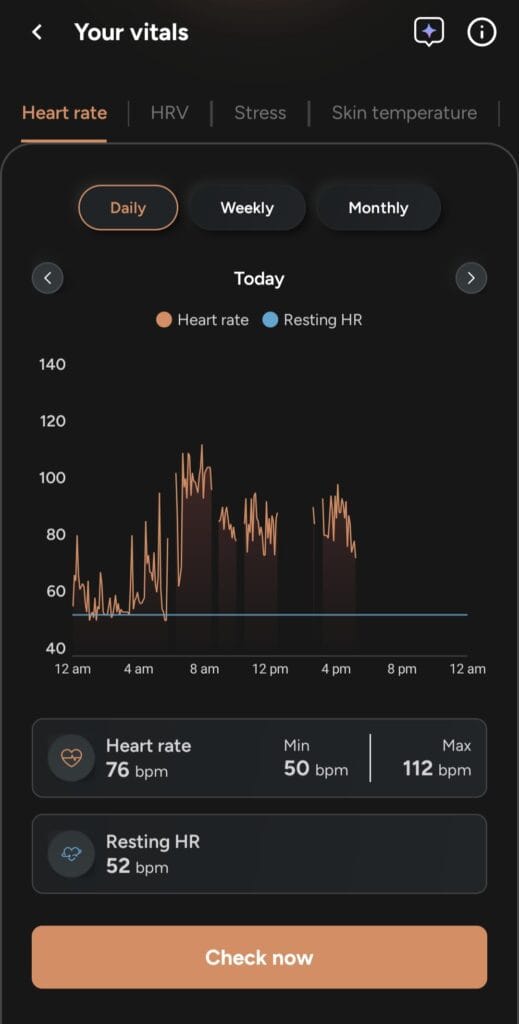
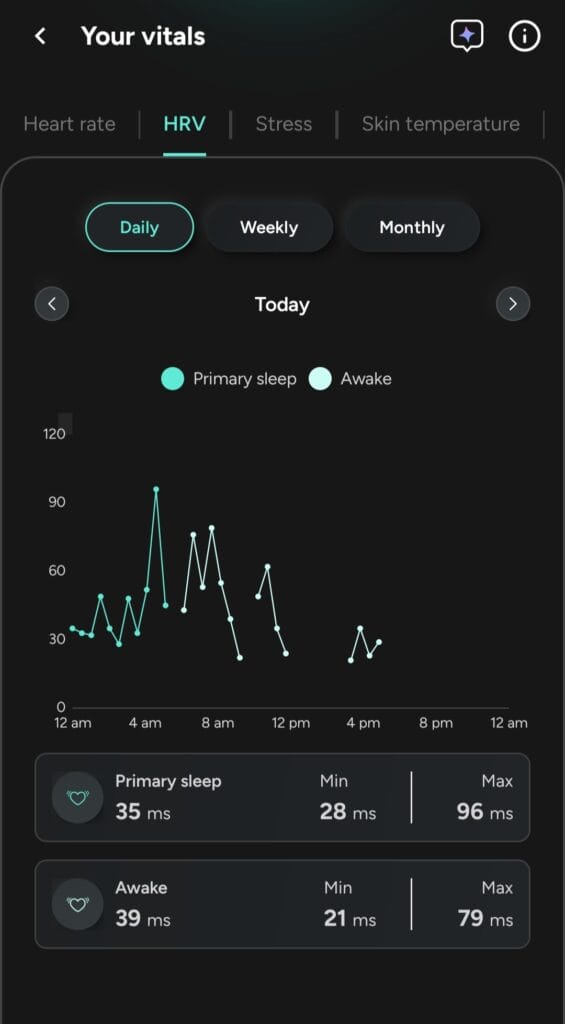
These are the metrics where a smart ring quietly excels — especially at rest. Here’s what each one actually tells you:
| Metric | What It Measures | Why I Care |
|---|---|---|
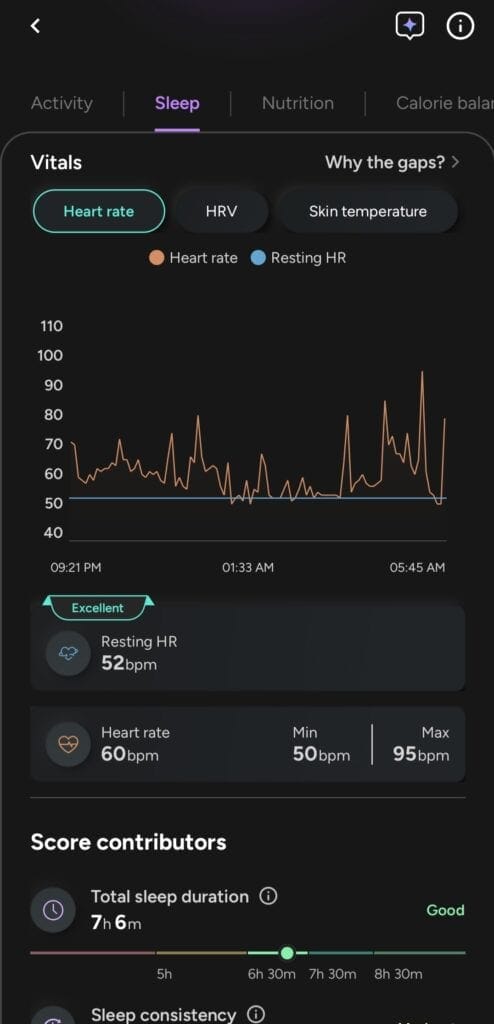
| Resting Heart Rate | Your heart’s baseline when fully relaxed | Mine dropped from 72 to 65 BPM over 3 months of consistent exercise |
| HRV (Heart Rate Variability) | Variation between heartbeats — higher is better | My best indicator of recovery; I’ve learned my baseline is around 45ms |
| VO2 Max | Your body’s maximum oxygen uptake capacity | Tracks my cardiovascular fitness trend over weeks/months |
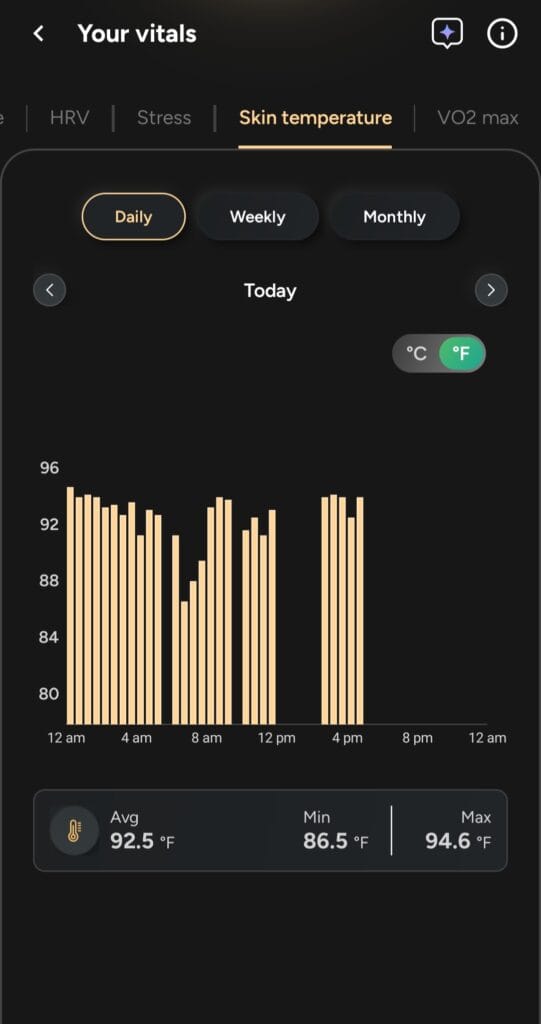
| Skin Temperature | Nightly body temperature changes | Caught a cold coming on 2 days before I felt symptoms |
The finger is actually a better measurement site than the wrist for resting metrics. The arteries are closer to the skin surface, and there’s less “noise” from muscle and bone movement. Studies have shown that finger-based PPG sensors can provide more accurate resting heart rate readings compared to wrist-based devices.
My favorite moment with this ring? Noticing my skin temperature was elevated two nights in a row. I felt completely fine. Two days later, I woke up with a sore throat. The ring literally gave me a heads-up before my body did.
Does Food Score and Calorie Deficit Tracking Work on a Smart Ring?
Here’s where I need to be honest: no smart ring tracks what you eat. The “food score” and calorie deficit features work by pairing your ring’s activity data (calories burned, activity level) with what you log in a nutrition app.
My workflow looks like this:
- Ring tracks: Total daily energy expenditure (TDEE) based on activity, heart rate, and VO2 max estimates
- I log food in a tracking app: Takes about 5 minutes a day
- The app calculates: Calories in vs. calories out = my deficit or surplus
This combo has been more effective than any standalone food tracking app I’ve used. Because my ring’s calorie burn estimates are based on continuous heart rate monitoring (not just step counting), the “calories out” number is significantly more accurate than what my smartwatch used to give me.
Over the past 3 months using this system, I’ve maintained a consistent 300-400 calorie deficit on training days, and my weight trend has been steadily moving in the right direction.
Is a Smart Ring Worth It? My Honest Verdict
A smart ring is absolutely worth it if your goal is consistent, passive health tracking — especially for sleep, recovery, and long-term wellness trends. It won’t replace a smartwatch if you need real-time GPS for running, live workout stats, or wrist-based notifications.
Choose a smart ring if you:
- Want sleep data you’ll actually collect (because you’ll actually wear it to bed)
- Prefer checking your health data on your own terms, not being buzzed at all day
- Care about recovery, stress patterns, and long-term health trends
- Want a device that disappears into your daily life
Stick with a smartwatch if you:
- Need real-time GPS and pace data for running/cycling
- Want notifications, music control, and apps on your wrist
- Prefer active, in-the-moment coaching during workouts
For me, the choice was clear. The ring does fewer things than a smartwatch — but the things it does, it does better, because I actually wear it 24/7.
If you’re considering trying a smart ring, I’d suggest starting with a sizing kit from whichever brand interests you — getting the right fit is the single most important factor for accurate tracking.
FAQ
A smart ring is worth it if your priority is comfortable, 24/7 health tracking — especially sleep. After wearing one daily for months, the sleep data, HRV insights, and recovery scores provided actionable health improvements. The main tradeoff is no display and limited real-time fitness feedback.
Smart rings are generally more comfortable for sleep tracking because they’re lightweight and don’t have a bulky screen pressing against your wrist. In personal testing, sleep stage accuracy was comparable to a smartwatch, but the ring was worn consistently because it didn’t disrupt sleep.
Smart rings are highly accurate for resting heart rate, HRV, sleep stages, and skin temperature. They are less accurate than chest straps for active exercise heart rate. In daily use, the health metrics from the smart ring closely matched clinical readings during routine checkups.
Yes, smart rings track stress primarily through heart rate variability (HRV) measurements. Lower HRV typically indicates higher stress. The ring provides a daily stress score and can reveal patterns — such as how late-night screen time or poor sleep affects stress levels the following day.
Smart rings typically track heart rate, heart rate variability (HRV), resting heart rate, blood oxygen (SpO2), skin temperature, sleep stages (deep, REM, light), sleep score, recovery/readiness score, steps, calories burned, active time, distance, stress score, and VO2 max estimates.
About the Author: Akshay is a wellness enthusiast and the founder of Wellness Health Daily. After years of experimenting with wearable health technology, nutrition strategies, and evidence-based wellness routines, Akshay shares honest, experience-driven insights to help readers make informed health decisions.